Heather Dewey-Hagborg
How much can you learn about a stranger from a hair? Is it possible to fall in love with someone through their DNA? Can one make a virus that infects the world with love?
These are some of the questions that have inspired Heather Dewey-Hagborg’s work at the intersection of art and biology. The questions that intrigue her are philosophical, scientific, and political. For Dewey-Hagborg, artistic practice is like playing detective in a novel that is always changing; there will be no grand reveal at the end, but the work is a process of constant discovery.
All technology is political, and as an artist working with biotechnology, Dewey-Hagborg finds it crucial to engage these biopolitics directly. This is also the site she finds most exciting artistically: revealing the politics embedded in technologies and social structures that might otherwise be missed.
Through creative practice in the medium of life itself, her work aims to draw viewers into a deep and complex relationship with their own biology and a visceral understanding of the social impact of new technologies. Through close reading and careful writing of the material of biotechnology, she subjects it to critique, opens it to play, and sometimes subverts it.
Dewey-Hagborg’s work comes from a place of conflicted admiration and scrutiny, a passion for the beauty and elegance of science and a genuine love for the act of experimentation, combined with an effort to understand its framing, flaws, limitations, and biases. Often it is through experimentation, and through hands-on work with the material of a discipline, that its organizational contradictions come to light. By physically engaging with the production of scientific knowledge and technological applications, she seeks to untie some of these hidden knots, using the materials of the discipline to show rather than say what she finds.
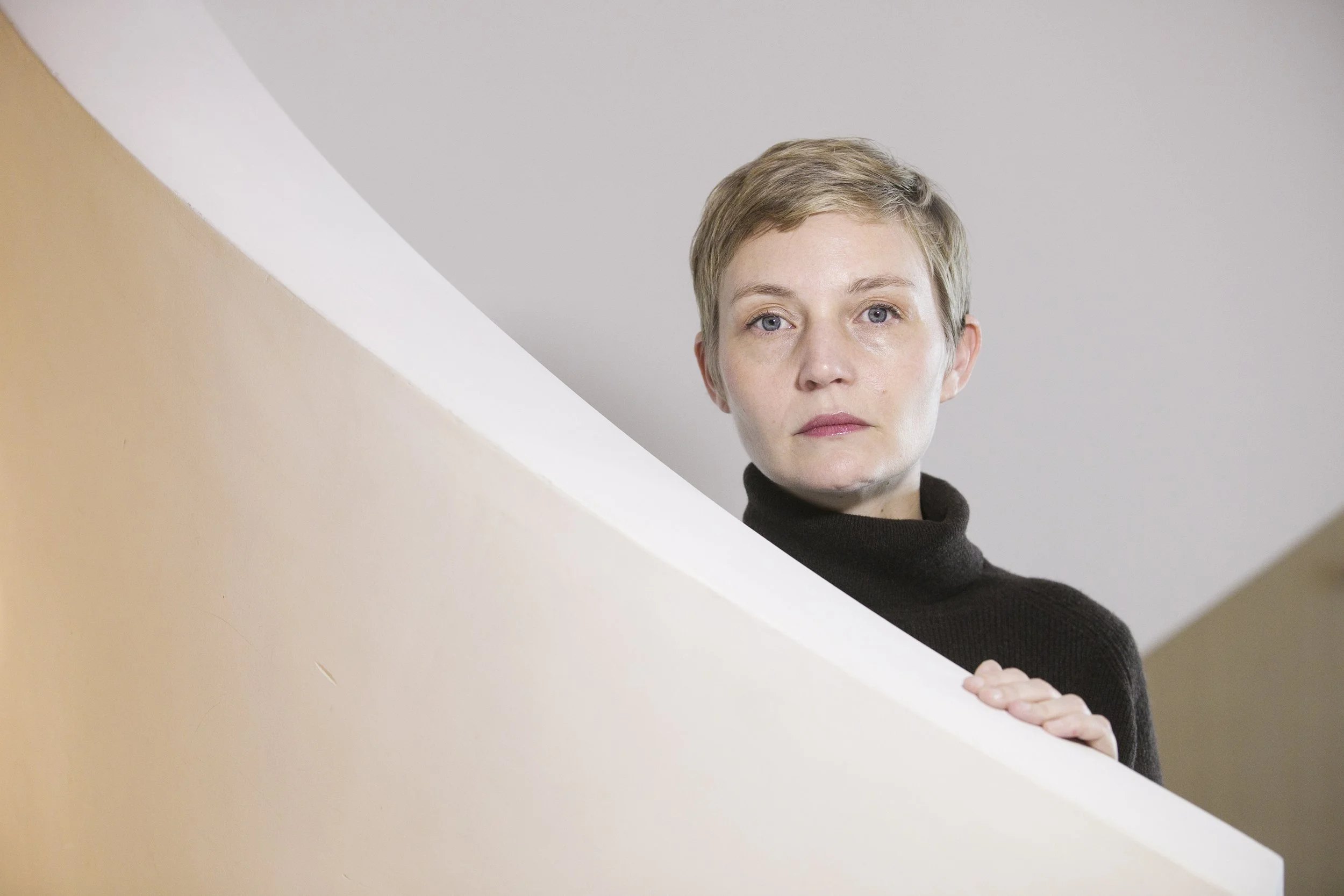
Dr. Heather Dewey-Hagborg is a New York-based American-Canadian artist and biohacker interested in art as research and technological critique. Her biopolitical art practice includes Stranger Visions, for which she created portrait sculptures from analyses of genetic material—hair, cigarette butts, and chewed gum—collected in public places.
Dewey-Hagborg has shown work internationally at events and venues including the World Economic Forum, the Daejeon Biennale, the Guangzhou Triennial, the Shenzhen Urbanism and Architecture Biennale, Transmediale, the Walker Art Center, the Philadelphia Museum of Art, and MoMA PS1. Her work is held in public collections including the Centre Pompidou, the Victoria and Albert Museum, and SFMOMA, and has been widely discussed in media including The New York Times, the BBC, Artforum, and Wired.
Dewey-Hagborg holds a Ph.D. in Electronic Arts from Rensselaer Polytechnic Institute. She is a founding board member of Digital DNA, a European Research Council-funded project investigating the changing relationships between digital technologies, DNA, and evidence.